A simpler operation
1 session
Then lenders worked independently
Observed after an initial introduction, in testing and production.
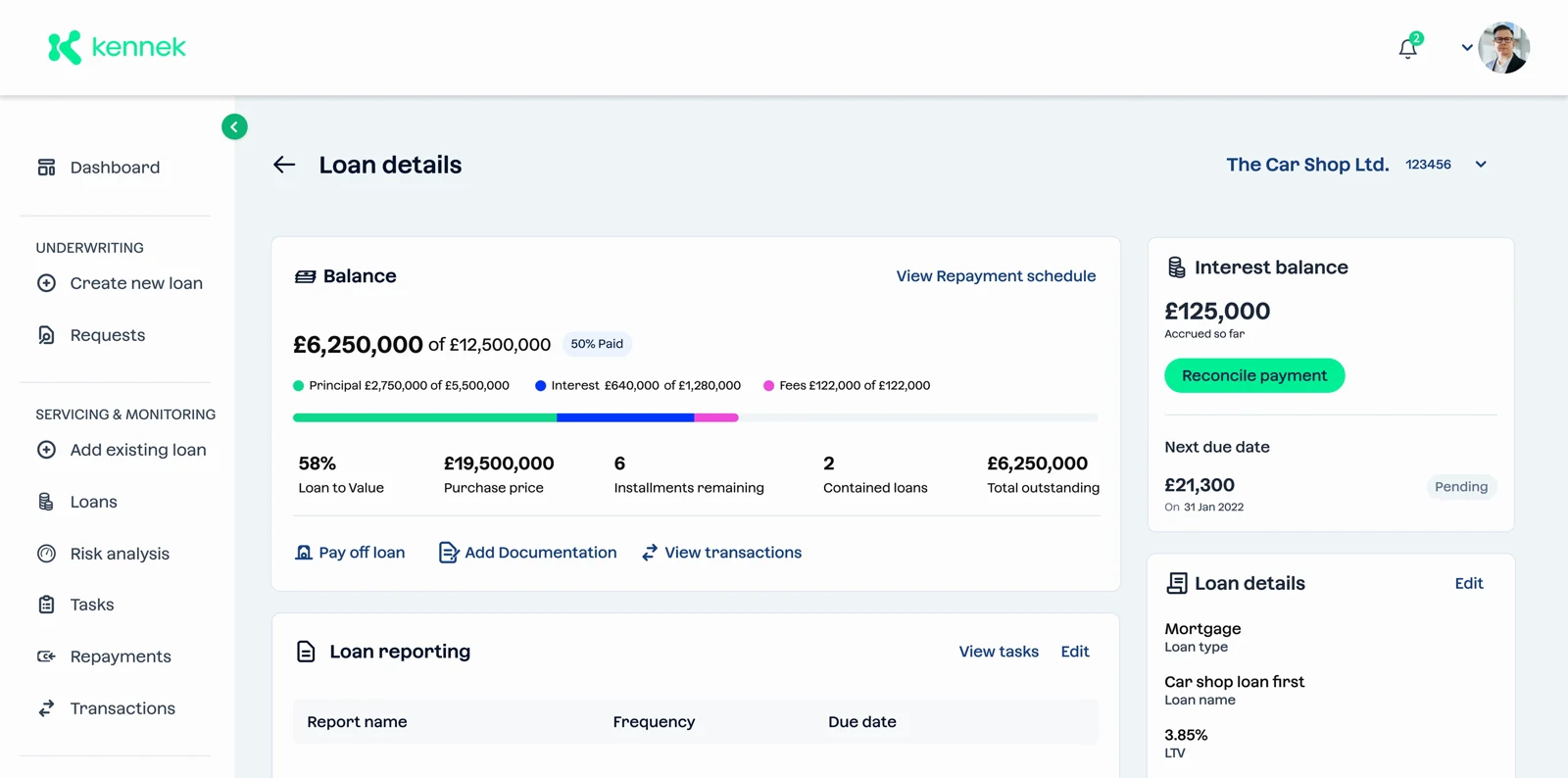
I designed a loan management platform from scratch to help lenders operate faster, work more simply and manage more loans. It connected setup, repayments and borrower information in one place.
A simpler operation
Observed after an initial introduction, in testing and production.
Adoption in real lending operations
Eight firms were using Kennek in their loan operations.
Support lending at scale
Loans managed on the platform, giving the design real operating scale.
The challengeWhy it mattered
Before Kennek, lenders relied on spreadsheets, emails and internal documents. Work could stretch across months, with several people chasing information. I interviewed lenders, reviewed their files and visited their offices to understand that operation.
The decisionMake complexity usable
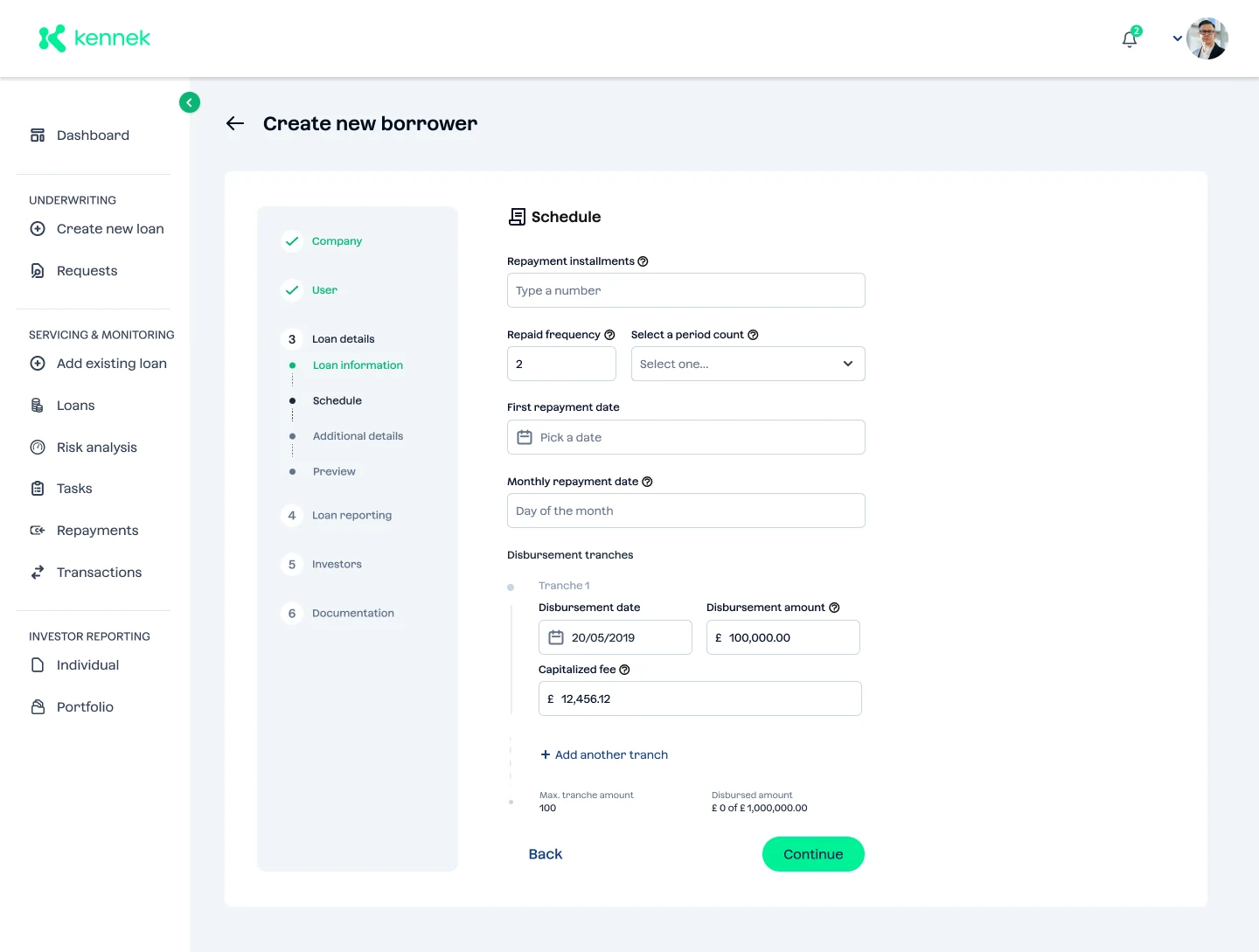
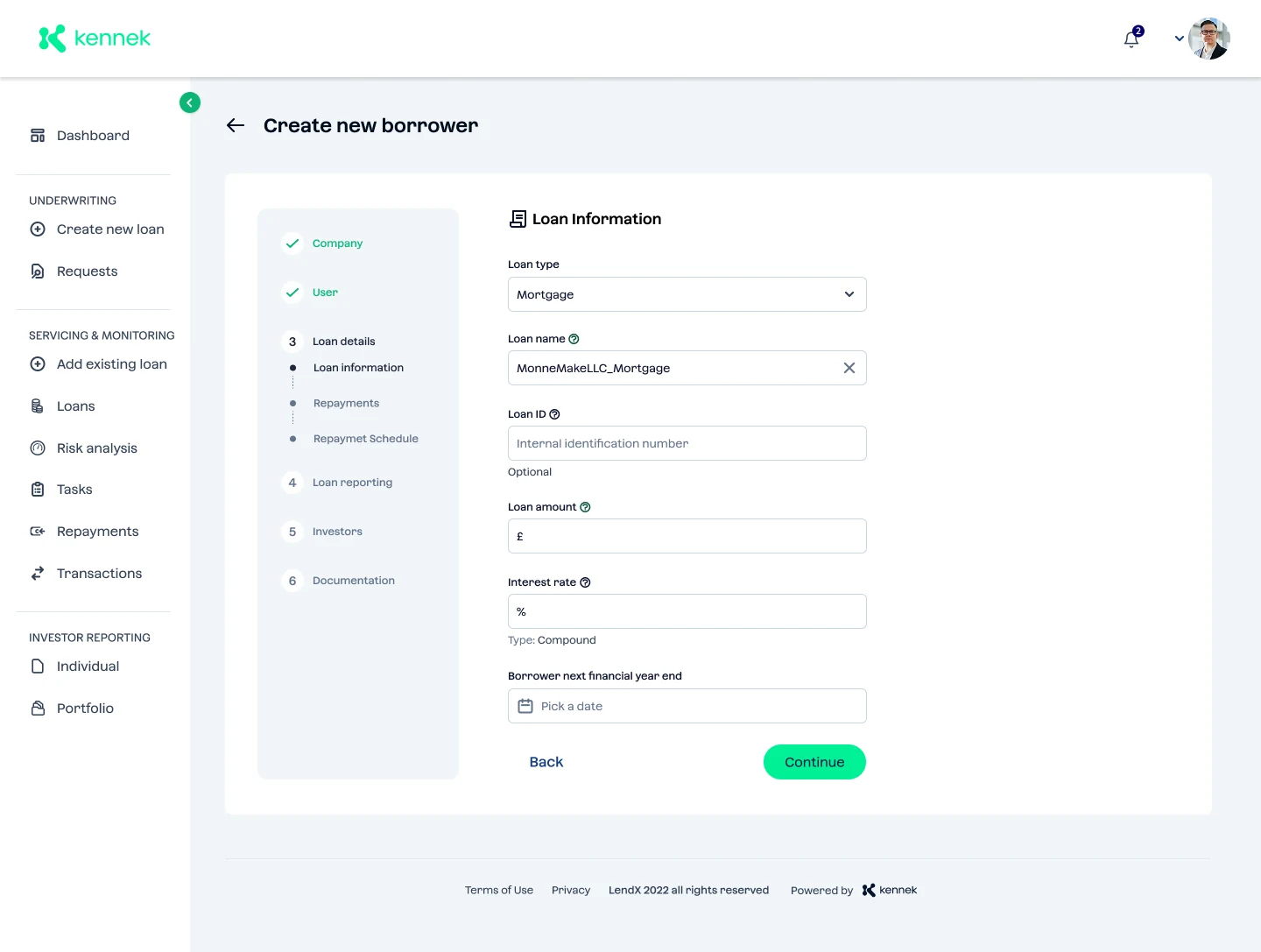
With lending specialists and engineering, I balanced the data needed to generate a repayment schedule against the information lenders actually had available. I organised setup into six stages, with smaller steps inside Loan details.
Six stages keep company, loan, reporting, investor and document information grouped.
Loan details opens into information, repayments and schedule, without adding more main stages.
Lenders enter the terms before reviewing the schedule generated from them.
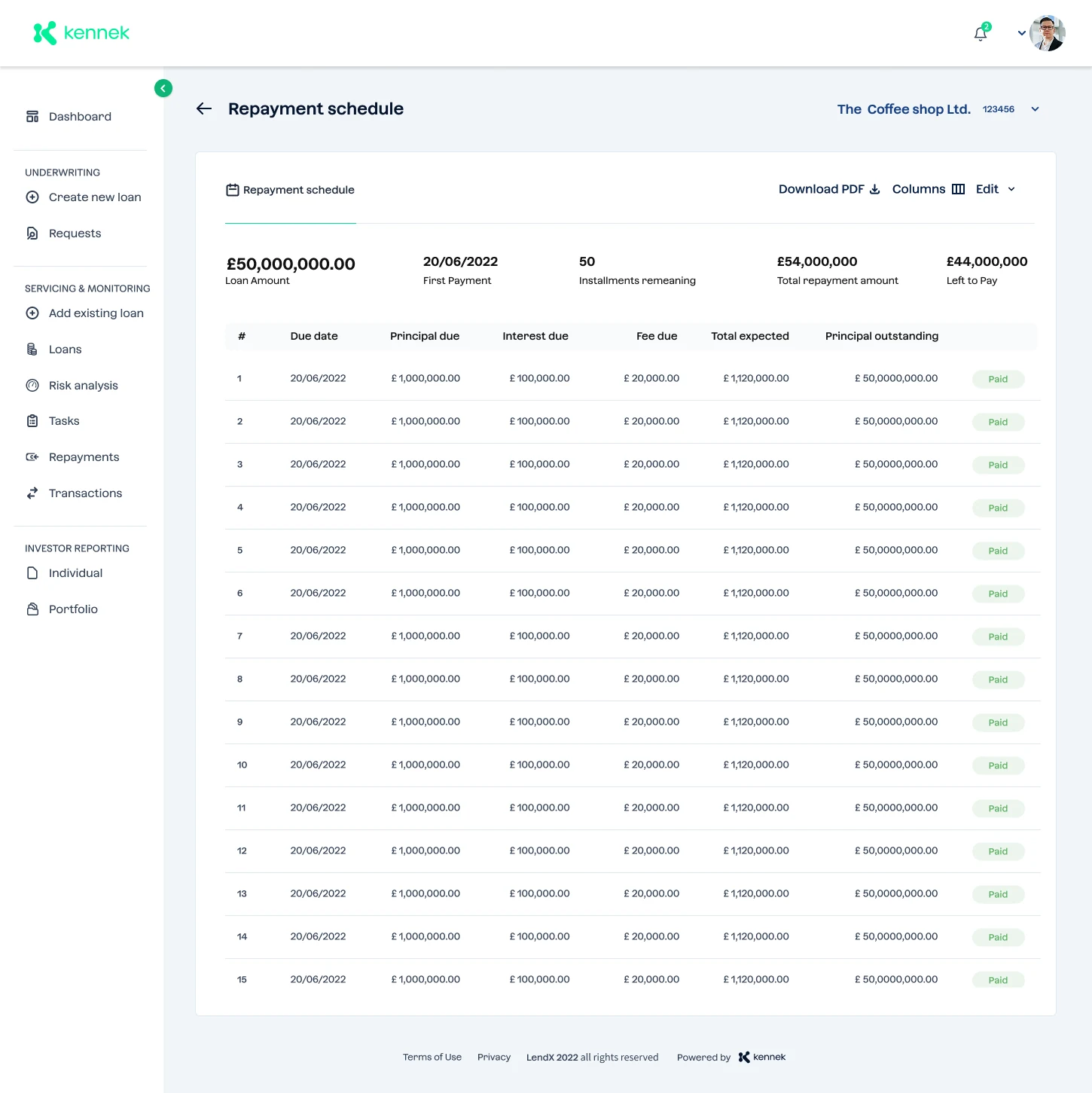
The engine turns loan terms into dates and amounts. I designed the schedule so lenders could see principal, interest and fees together, then use it to follow the loan.
The operationConnect the two sides
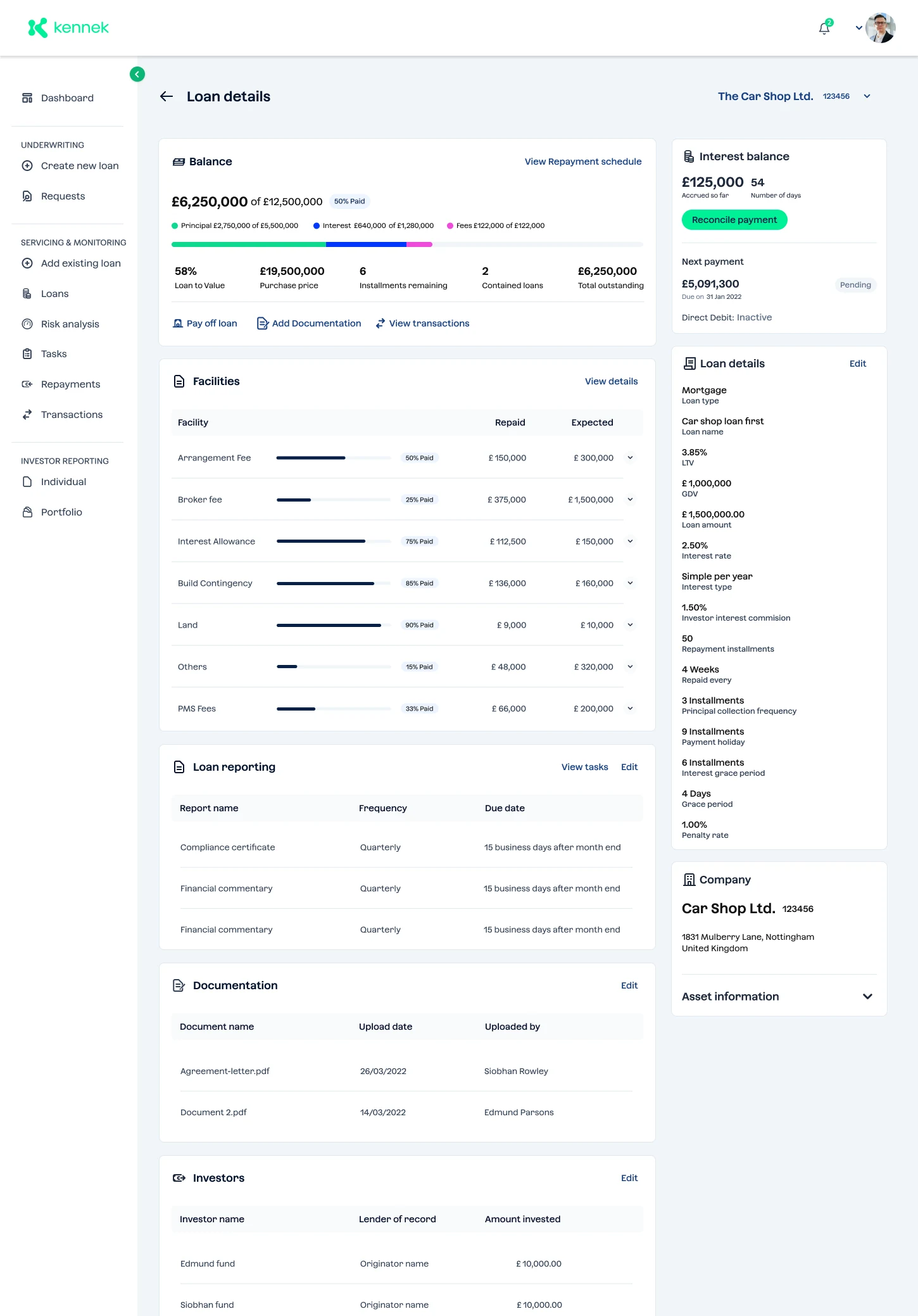
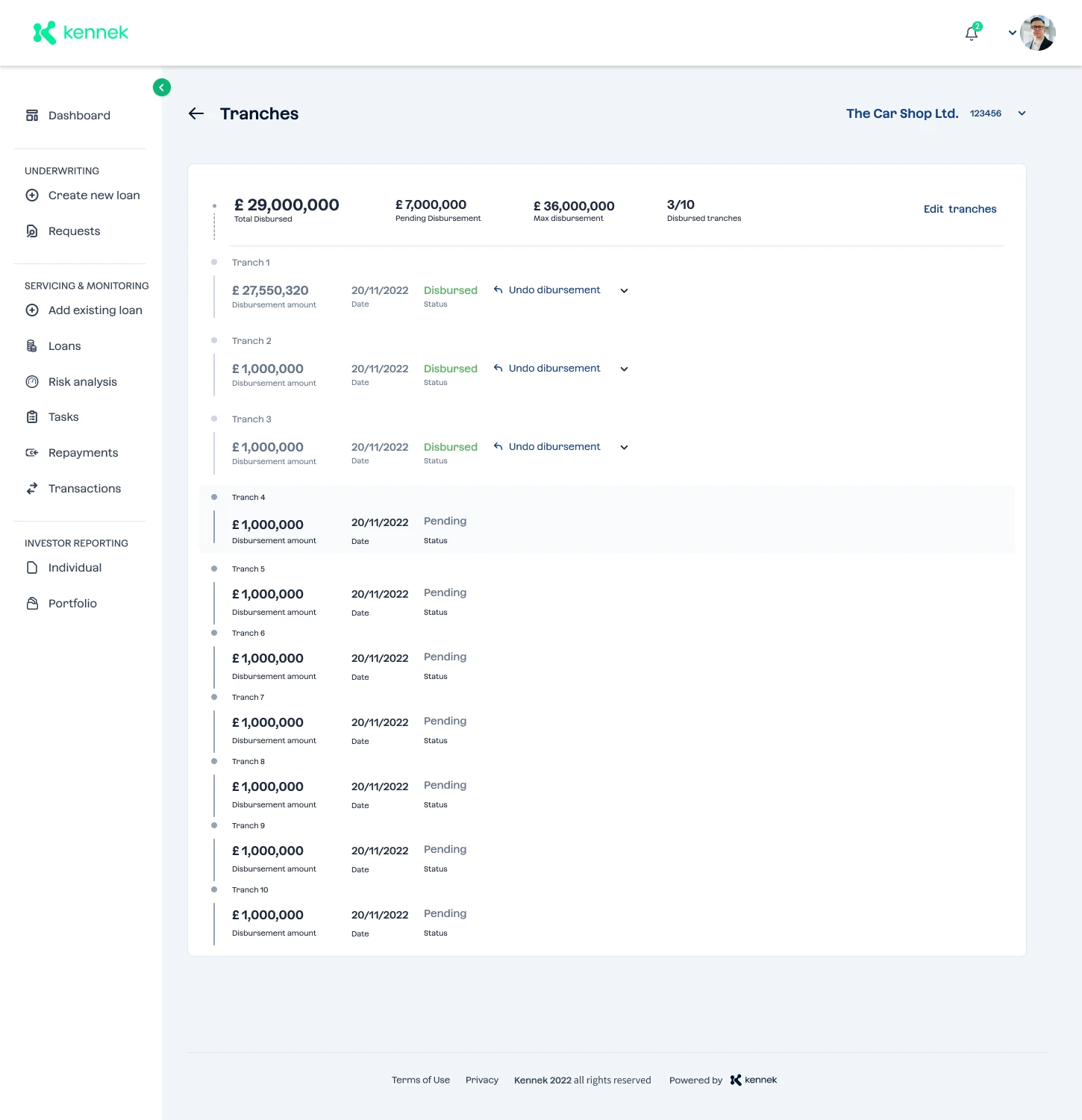
Lenders and borrowers needed to understand the same loan, with different permissions. I brought the balance, next payment and schedule into the loan record, and gave borrowers access to their information and documentation.
The lender’s record puts the current balance and upcoming payment alongside access to the schedule and loan management actions.
Lender view: balance, next payment and access to the repayment schedule.
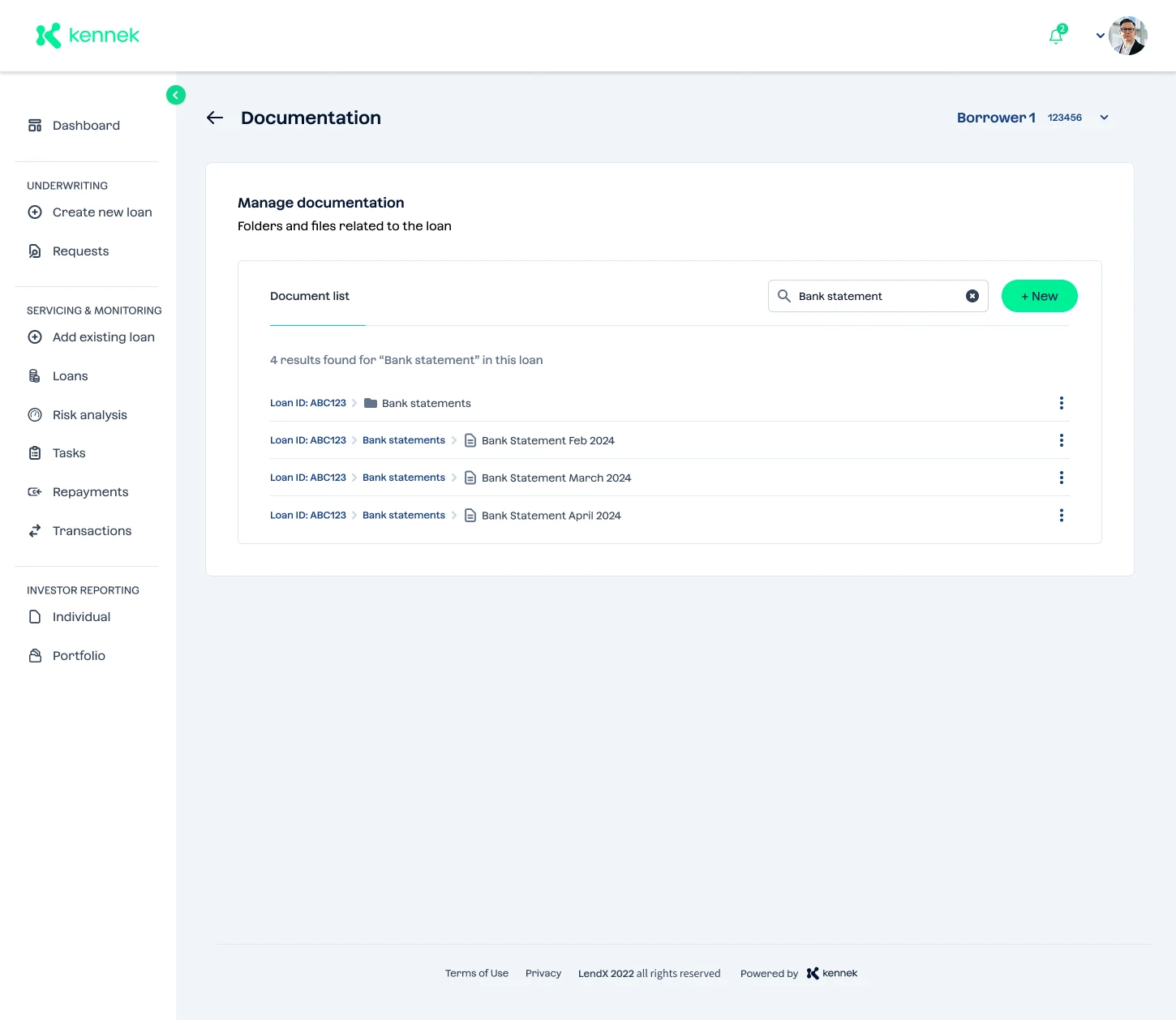
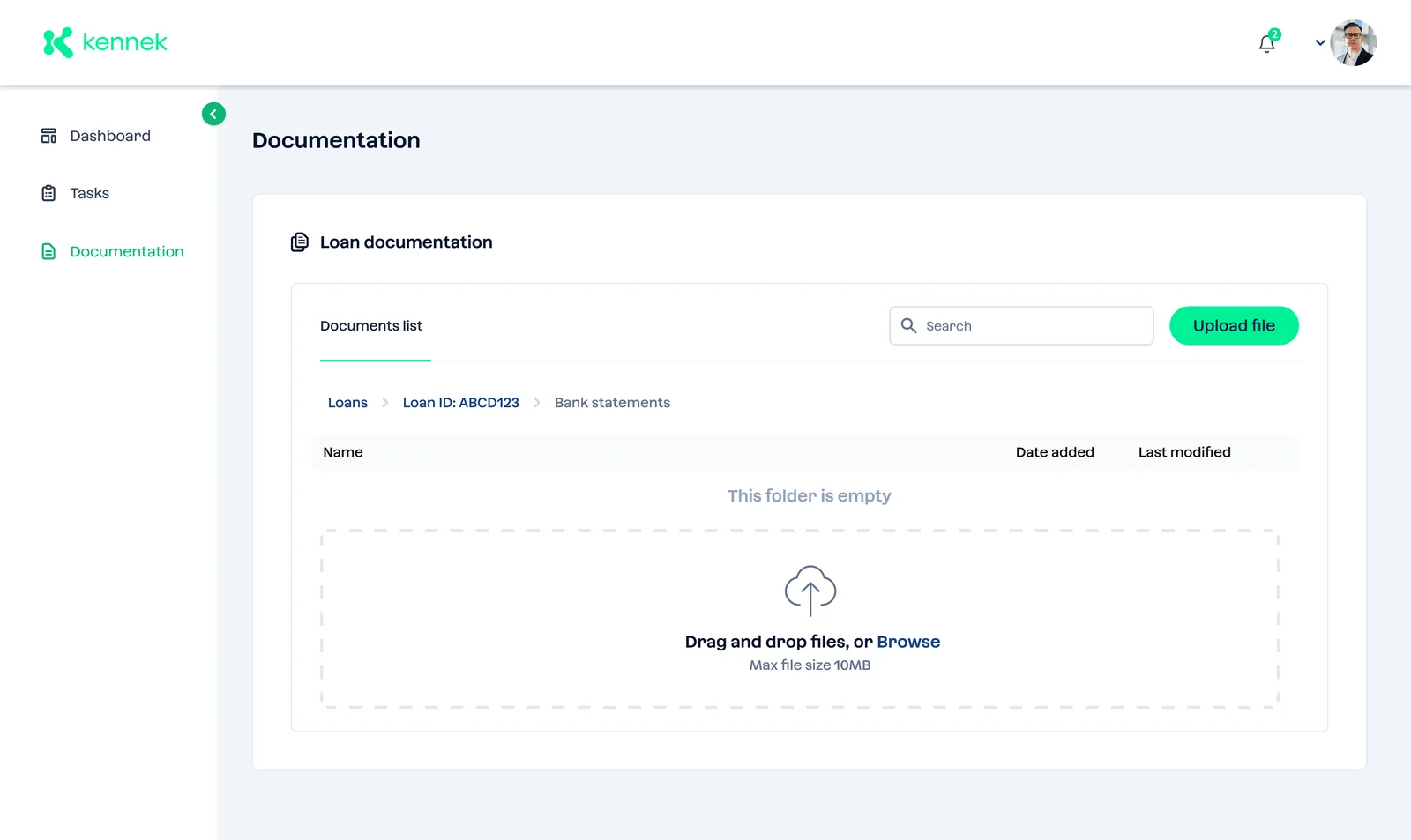
Borrowers upload their documentation straight into the loan, instead of sending it in scattered emails. Every file lands securely with the lender, filed against the right loan, so nothing gets lost and everyone works from the same place.
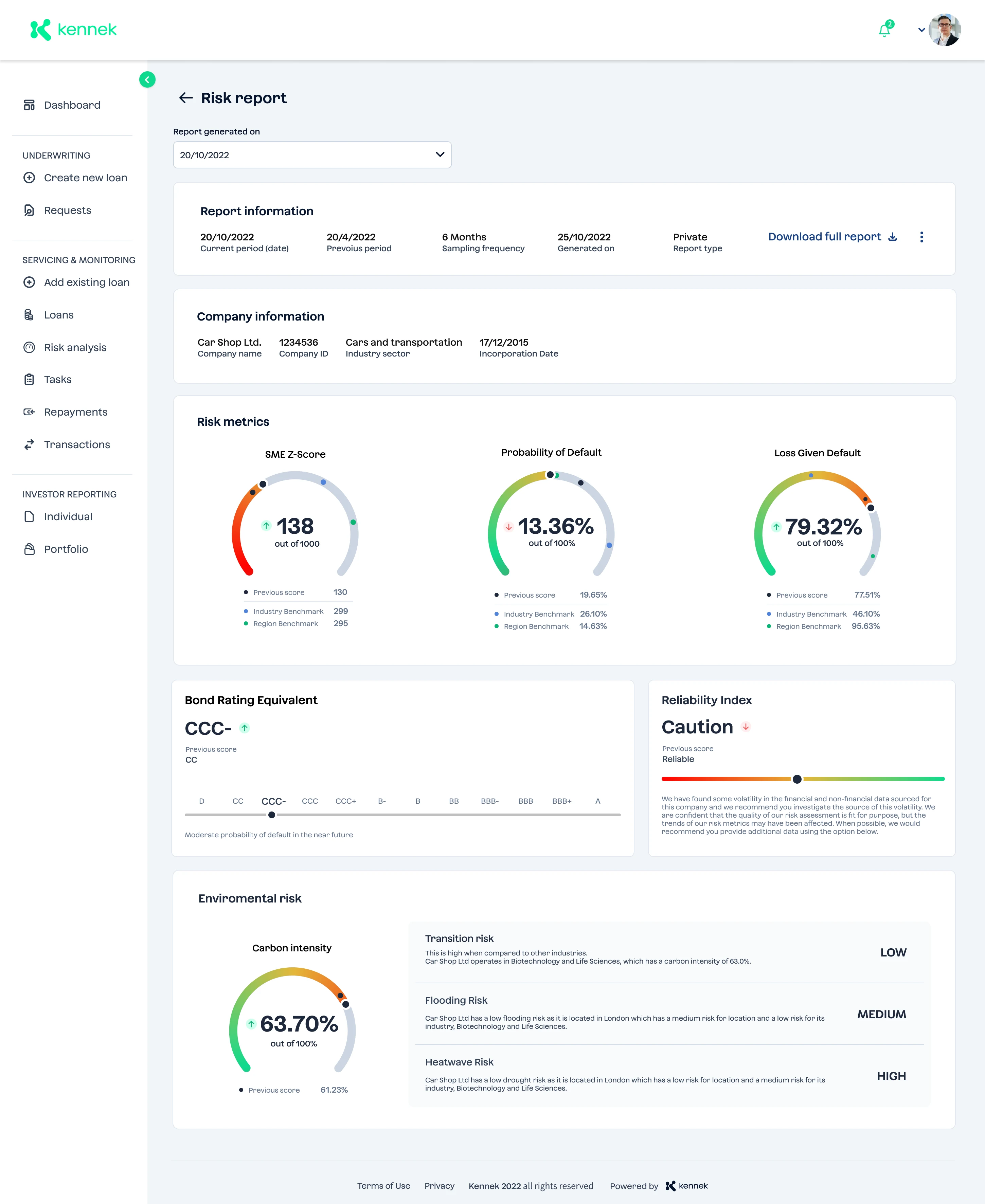
I organised key risk measures in one dashboard, including default probability, loss given default and rating equivalents.
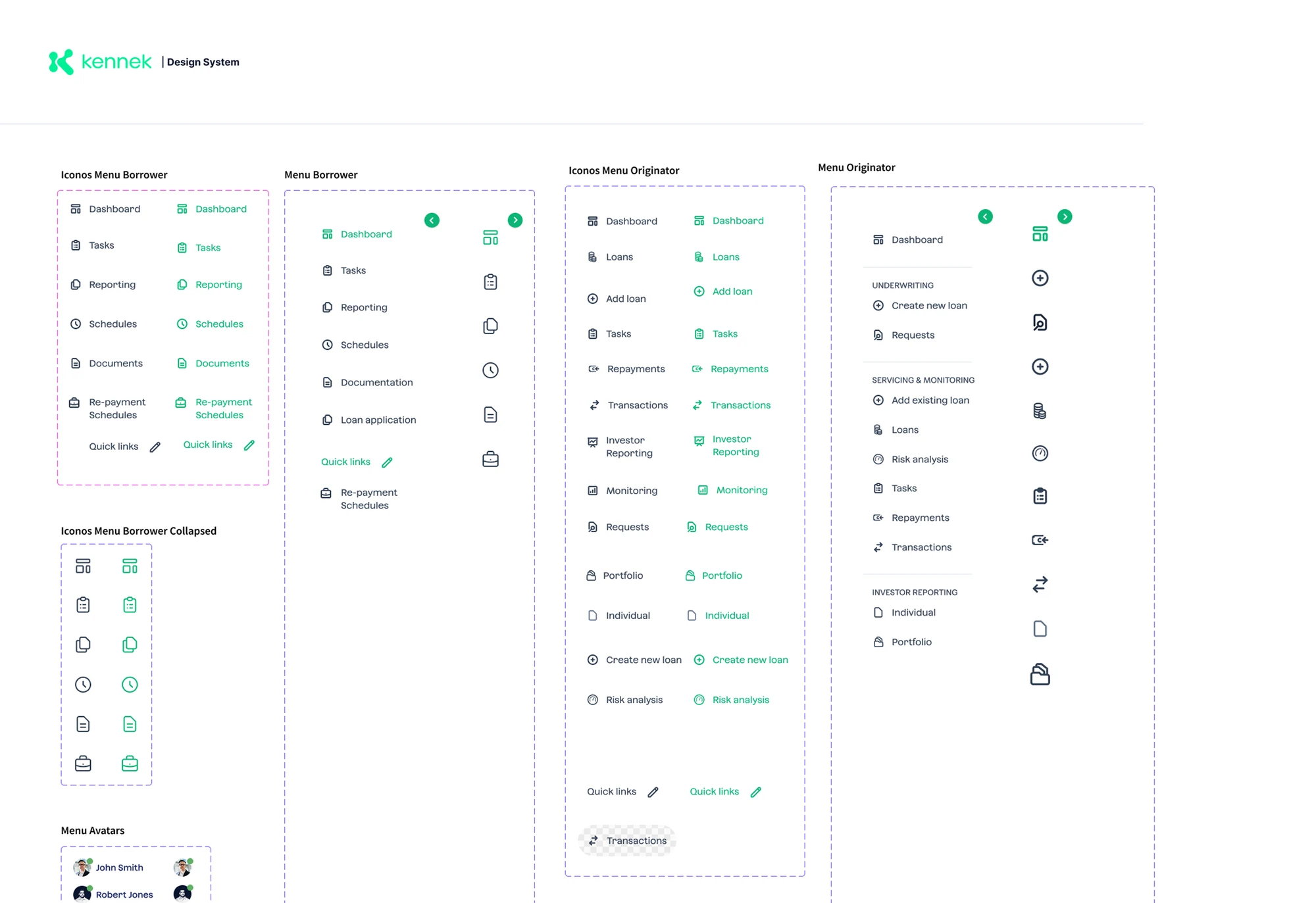
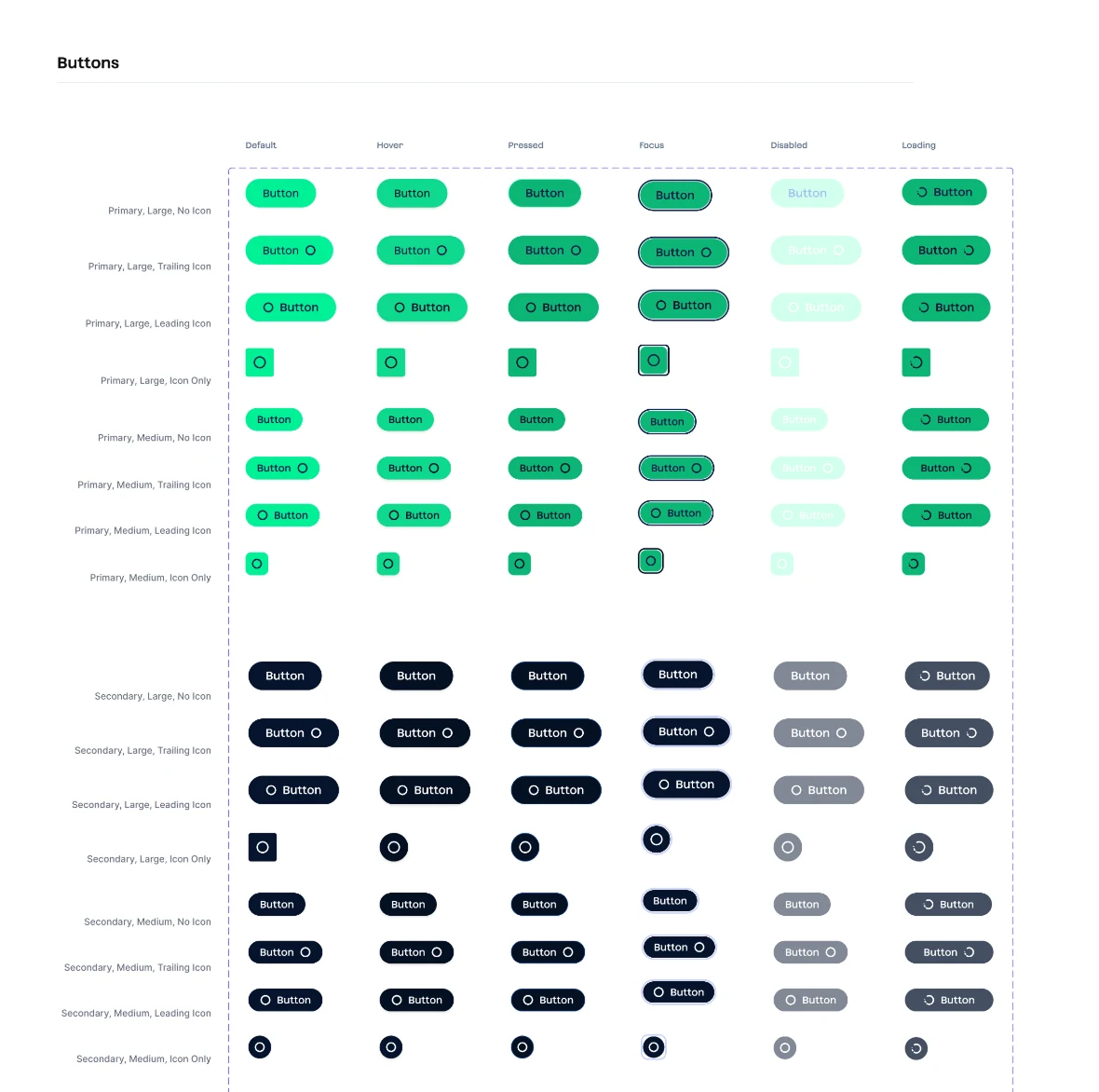
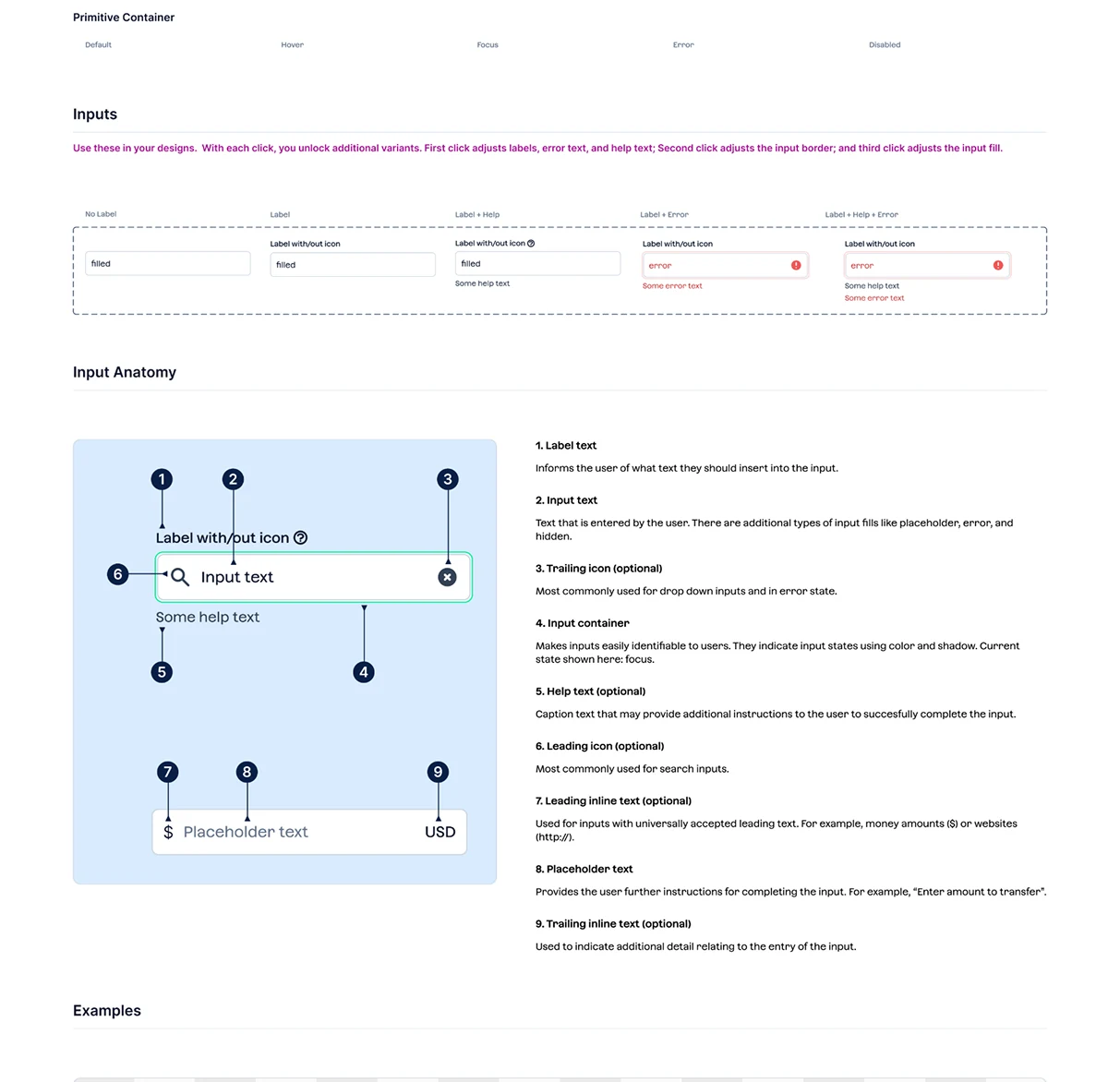
I created the design system from scratch: foundations, components and patterns for the platform. The colour palette came from the marketing agency.
What reached productionThe outcome
Kennek reached eight lending businesses in production, with more than £100 million in loans under management. In testing and production, we observed lenders working independently after one initial onboarding session.
We tested loan setup live with lenders before development, observing how they entered a company, loan terms and documentation. After that first introduction, lenders operated on their own.